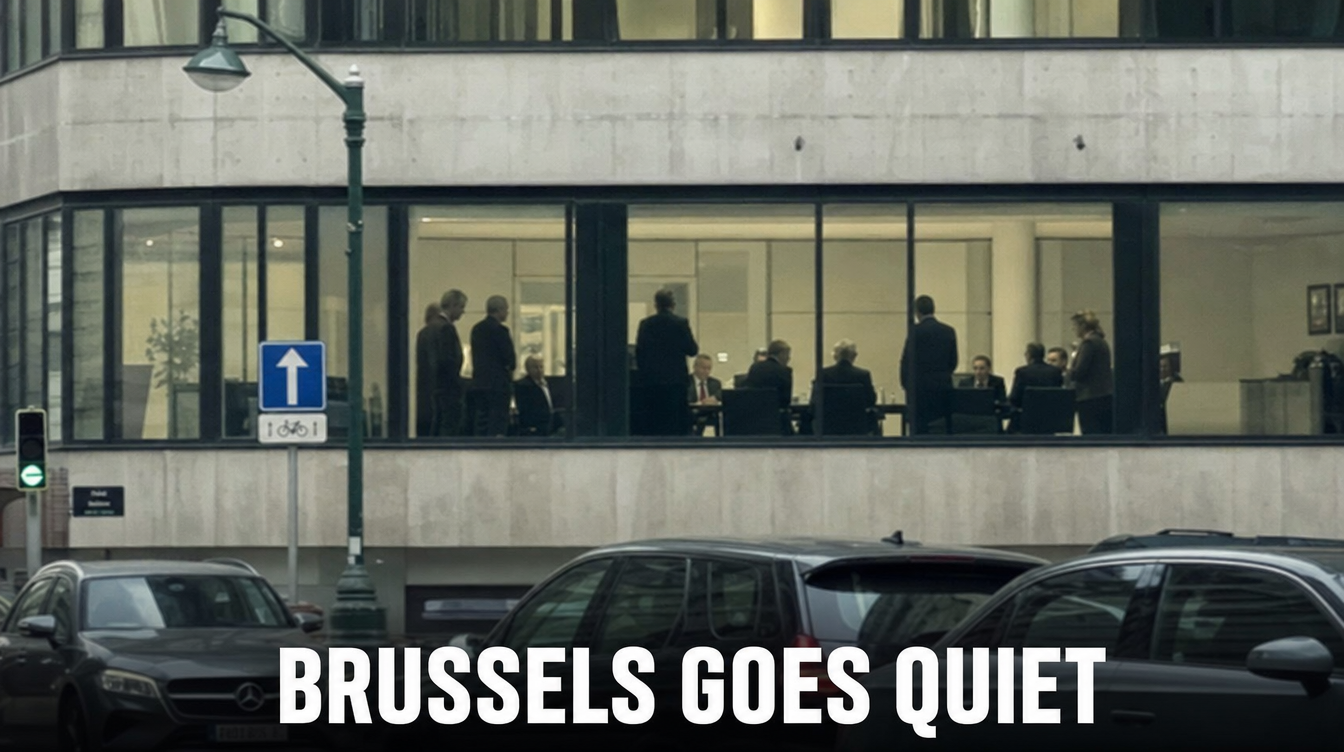
For years, discussions among European energy ministers focused mainly on gas supplies, electricity prices, and energy security. But recently, the tone of these conversations has started to change.
Behind closed doors and during public economic forums, officials across Europe are increasingly discussing another issue alongside energy policy: how governments, businesses, and ordinary citizens can protect their financial stability during a period of growing uncertainty.
As Europe continues facing inflation pressure, volatile energy markets, geopolitical tensions, and slower economic growth, financial resilience has become just as important as energy resilience.
The Energy Crisis Changed More Than Utility Bills
When energy prices surged across Europe, the impact quickly spread far beyond heating and electricity costs.
Manufacturing became more expensive. Transportation costs increased. Food prices rose. Small businesses struggled to adapt. Families across Europe suddenly found themselves paying significantly more for everyday living expenses.
The result was not only an energy challenge — it became a broader economic and financial crisis.
Many policymakers now believe that protecting citizens during future instability requires more than simply securing gas supplies. It also means helping economies become financially stronger and more adaptable.
Europeans Are Becoming More Concerned About Savings and Financial Stability
According to analysts and financial experts, one of the biggest shifts happening across Europe is psychological.
People are becoming more cautious about:
- Inflation and purchasing power
- Rising living costs
- Economic uncertainty
- Currency fluctuations
- Long-term financial security
As a result, conversations about financial education, digital innovation, and alternative economic tools are becoming more common at both political and public levels.
Some European officials have openly acknowledged that technological innovation and artificial intelligence may play a major role in helping economies adapt more efficiently to future crises.
Technology and AI Enter the Conversation
Artificial intelligence is increasingly being discussed not only as a technological breakthrough but also as an economic tool.
Across Europe, AI systems are already being used in:
- Energy optimization
- Supply chain management
- Financial forecasting
- Risk analysis
- Market automation
- Industrial efficiency
Supporters believe advanced technologies may help businesses and individuals make faster and smarter financial decisions during unstable periods.
This growing interest in automation and AI-driven systems reflects a broader European effort to modernize economies while reducing vulnerability to future shocks.
A New Economic Mindset Emerging in Europe
Experts say Europe is entering a new phase where economic security is being viewed more holistically.
In the past, discussions often separated energy policy from financial policy. Today, many governments see them as deeply connected.
High energy costs can weaken industries, reduce consumer confidence, and slow investment. In turn, economic instability can make countries more vulnerable during future crises.
Because of this, policymakers are increasingly focusing on strategies that combine:
- Energy independence
- Technological innovation
- Financial resilience
- Digital transformation
- Sustainable economic growth
This shift is influencing everything from investment policy to innovation funding across the European Union.
Businesses Are Also Adapting
European companies are adjusting rapidly to the new reality.
Many businesses are investing heavily in automation, artificial intelligence, and digital systems to reduce operational costs and improve long-term stability.
Technology firms, AI startups, renewable energy companies, and fintech platforms have seen growing attention from investors looking for industries that may benefit from Europe’s transformation.
Some analysts believe this period of uncertainty could accelerate one of the biggest economic shifts Europe has experienced in decades.
What Happens Next?
While gas prices and energy security remain critical concerns, European leaders increasingly understand that the future challenge is broader than energy alone.
The discussion is no longer only about keeping homes warm during winter — it is about how economies, businesses, and ordinary citizens can remain financially stable in a rapidly changing world.
As Europe continues navigating economic uncertainty, technology and financial adaptability may become just as important as pipelines and power stations.
And for millions of Europeans, the question is no longer simply how to manage rising energy costs — but how to build greater financial resilience for the future.
